How cocoa processors can build a fermentation process that absorbs origin and seasonal variability using enzyme-supported mucilage management, precursor development, and repeatable batch controls.
Request pricingEvery fermentation manager knows the pattern: beans from the same supplier behave differently after a wet harvest, a dry spell, a longer pod storage interval, or a shift in farm handling. Mucilage thickness changes. Bean mass heats differently. Drainage slows or accelerates. Acidity can push harder than expected. Cut-test color development becomes less predictable.
For a cocoa processing factory, that variability is not romantic origin character. It is a batch-control problem.
The goal is not to erase origin. The goal is to build a fermentation process that can survive seasonal change while protecting throughput, flavor precursor development, and downstream drying efficiency. That is where a technically grounded enzyme supplier for cocoa processing can support the factory team: not with a generic additive story, but with process tools matched to the actual behavior of the bean mass.
Cocoa beans arrive with a biological history. Even before fermentation begins, each lot carries differences that affect how the process moves.
Key sources of variation include:
When these variables are unmanaged, operators compensate by instinct: longer turns, delayed unloading, extra drying attention, or blending decisions made after the problem is already visible.
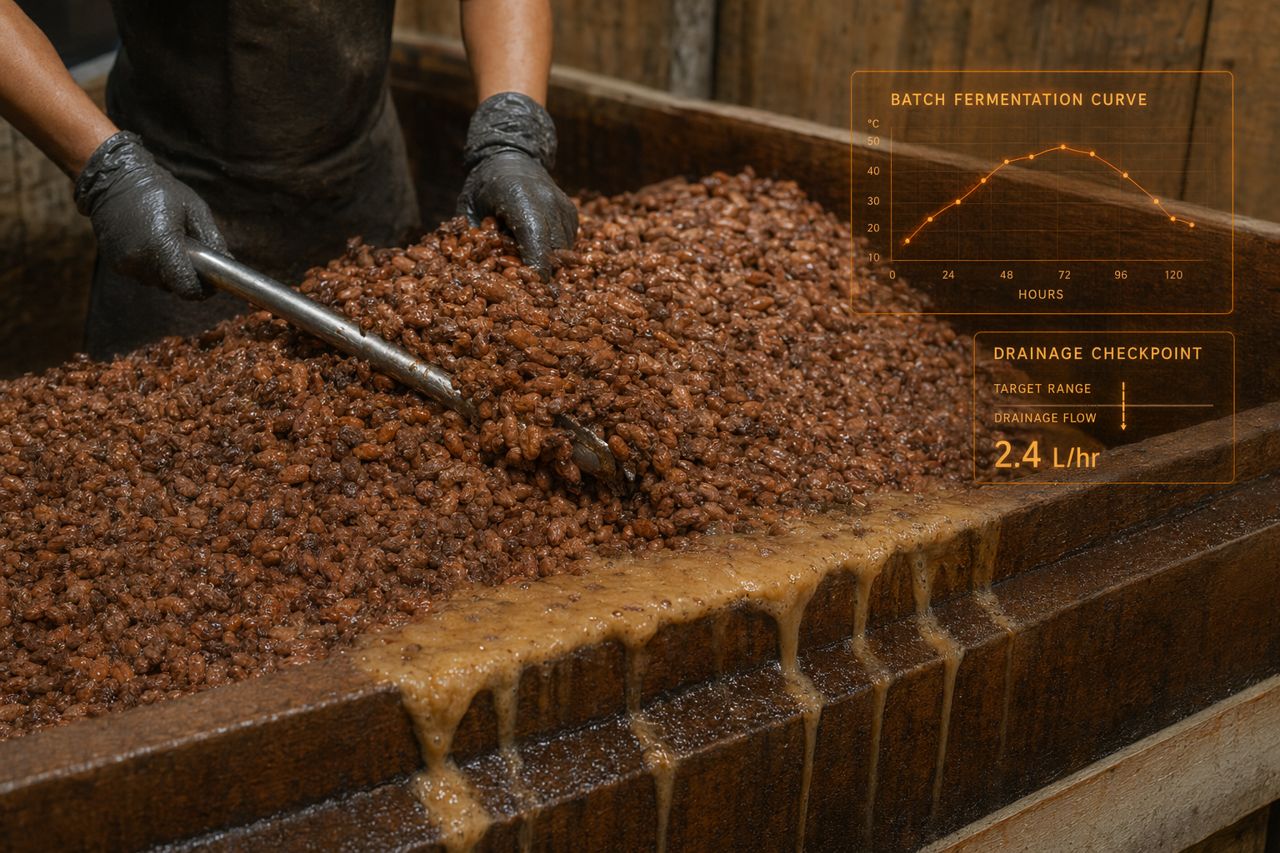
Mucilage is more than sticky pulp around the bean. It is the first process environment. Its breakdown influences drainage, oxygen movement, temperature rise, acid movement, and precursor formation inside the cotyledon.
If mucilage remains too heavy for too long, the batch may stay sluggish, wet, and uneven. If breakdown runs too fast or without control, the factory can see harsh acid development, inconsistent bean color, or a narrow window for unloading.
A practical enzyme strategy focuses on controlled pulp modification so the fermentation mass moves through the intended curve with less dependence on seasonal luck.
For cocoa factories, the value is operational:
Seasonal resilience starts by separating what must remain fixed from what should be adjustable.
Your factory should define a standard fermentation control map for each product stream:
This structure gives the team a common language. Without it, every seasonal adjustment becomes a one-off workaround.
The enzyme approach should respond to what the lot is doing, not to a fixed calendar assumption.
For example:
Enzymesbase supports cocoa processors by helping translate these observations into trial plans that production teams can actually run. The objective is not complexity. It is a repeatable decision model.
Do not start with the enzyme. Start with the batch record.
Useful factory-level indicators include:
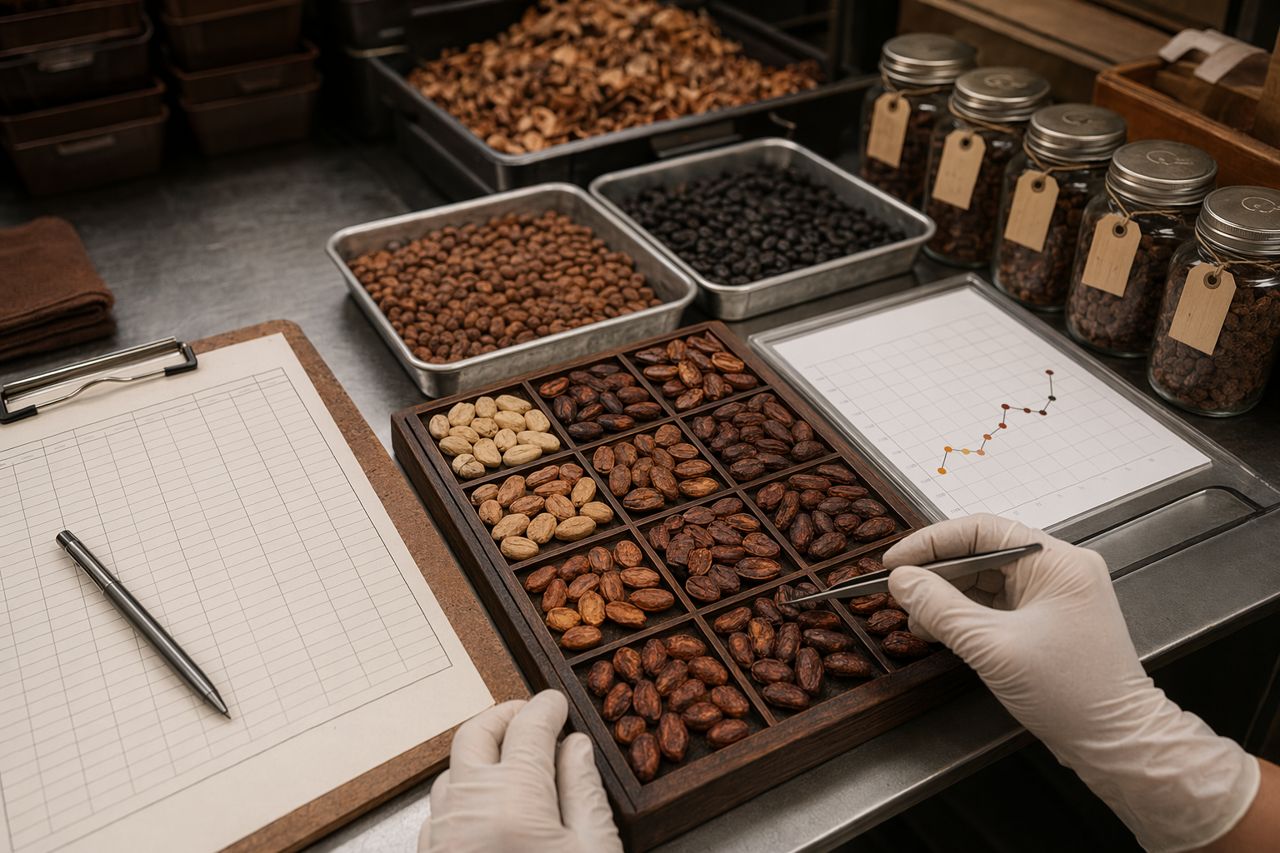
These are practical measurements that connect the fermentation floor to the quality room. They also help distinguish a true seasonal issue from a handling issue, a box loading issue, or a drying bottleneck.
A good enzyme trial in cocoa fermentation should be plant-floor realistic. It should fit your boxes, your turning discipline, your labor pattern, and your quality release process.
A typical evaluation plan can compare:
The important question is not whether the batch looks different on day one. The important question is whether the factory gains a more controllable fermentation path and a more reliable downstream result.
For industrial cocoa processors, fermentation inconsistency has a cost. It appears as longer batch holds, uneven drying loads, rework decisions, wider flavor variation, and harder production planning.
Working with an enzyme supplier for cocoa processing should create value in the places your factory already tracks:
The right enzyme program does not replace fermentation expertise. It gives that expertise a more stable biochemical foundation.
Enzymesbase works with cocoa processing factories that need practical enzyme solutions for real fermentation constraints. We look at the bean mass, the factory routine, and the quality target together.
Our support can include:
This is the difference between buying an ingredient and building a fermentation control tool.
It may be time to review your approach if your factory is seeing:
These are not isolated quality issues. They are signals that the fermentation process needs a wider control window.
If your cocoa processing factory needs a more repeatable way to manage origin and seasonal fermentation variation, Enzymesbase can help define an enzyme-supported trial around your actual process.
Request a quote through the on-site form and tell us your origin streams, fermentation format, and the batch behavior you want to stabilize.
Tell us your application and volume — we reply with pricing and lead time.
We have received your message. We will reply by email.