Plant-floor guidance for cocoa fermentation drainage channels, leachate handling, washdown routines, and enzyme-informed mucilage control in processing factories.
Request pricingFermentation performance is not only decided inside the box. It is also decided underneath it, around it, and at every point where mucilage-rich leachate moves across the floor.
For a cocoa processing factory, drainage and sanitation are batch-control systems. Poor channel design can hold acidic runoff, attract insects, spread odors, and create variable microbial pressure around active fermentations. Good drainage keeps the area controlled: liquid moves away cleanly, solids are captured before they block flow, washdown is predictable, and operators can read the process without fighting the floor.
As an enzyme supplier for cocoa processing, Enzymesbase looks at drainage through the same lens as fermentation: repeatability, contact time, viscosity behavior, temperature discipline, and clean separation between intended biochemical change and unmanaged contamination.
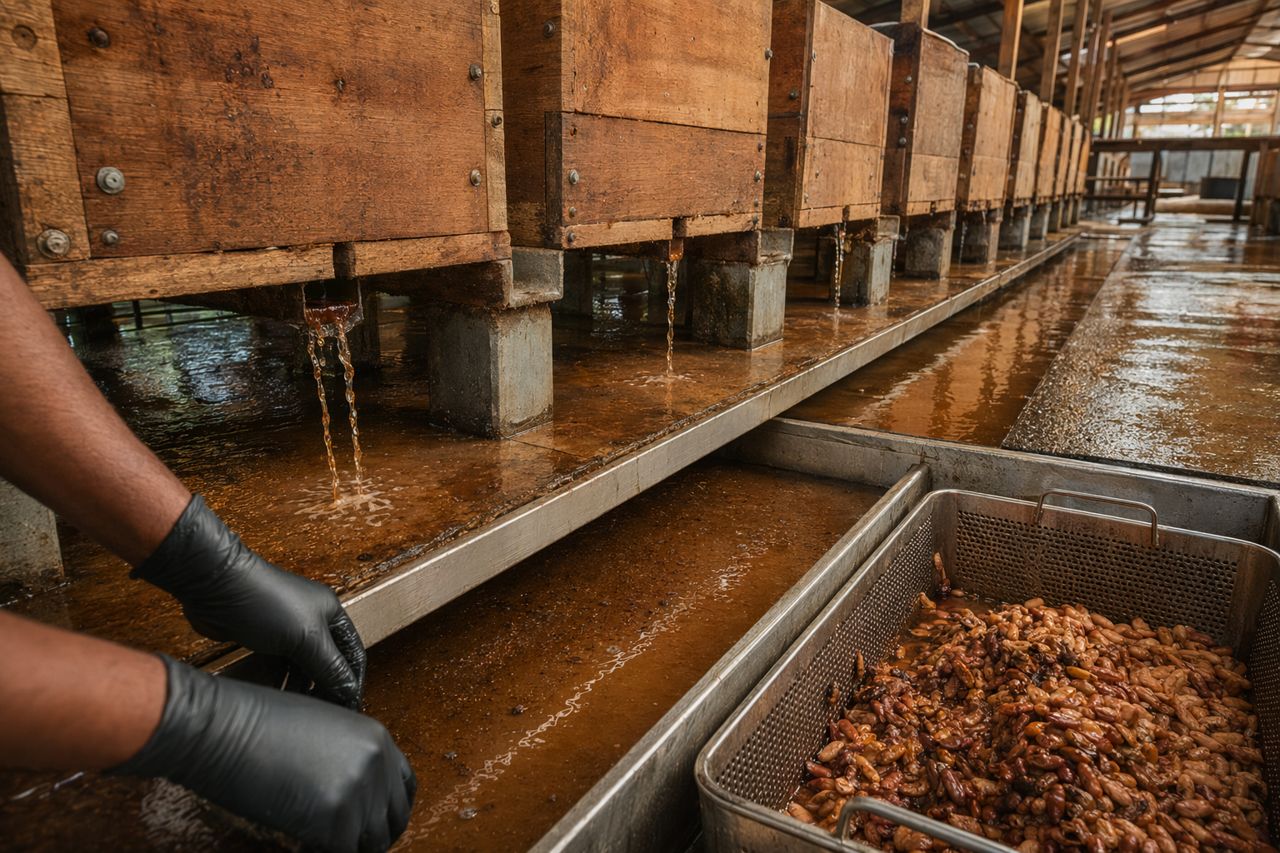
Fresh cocoa pulp releases liquid as temperature rises, mucilage structure loosens, and beans are turned. That liquid carries sugars, acids, fine pulp solids, and microbial load. If it sits in corners or open low points, it becomes a secondary process zone that no manager asked for.
Typical operational symptoms include:
None of these issues improves flavor precursor development. They add noise to the batch.
Drainage volume is not flat. The highest flow generally appears when pulp breakdown, heat generation, and turning events overlap. A practical channel layout accounts for that curve rather than treating leachate as general wastewater.
Floors around fermentation boxes should move liquid away from work zones without creating unsafe slick paths. The goal is visible, reliable flow toward collection points, not shallow pooling under platforms or in front of access steps.
Plant-floor checks should confirm:
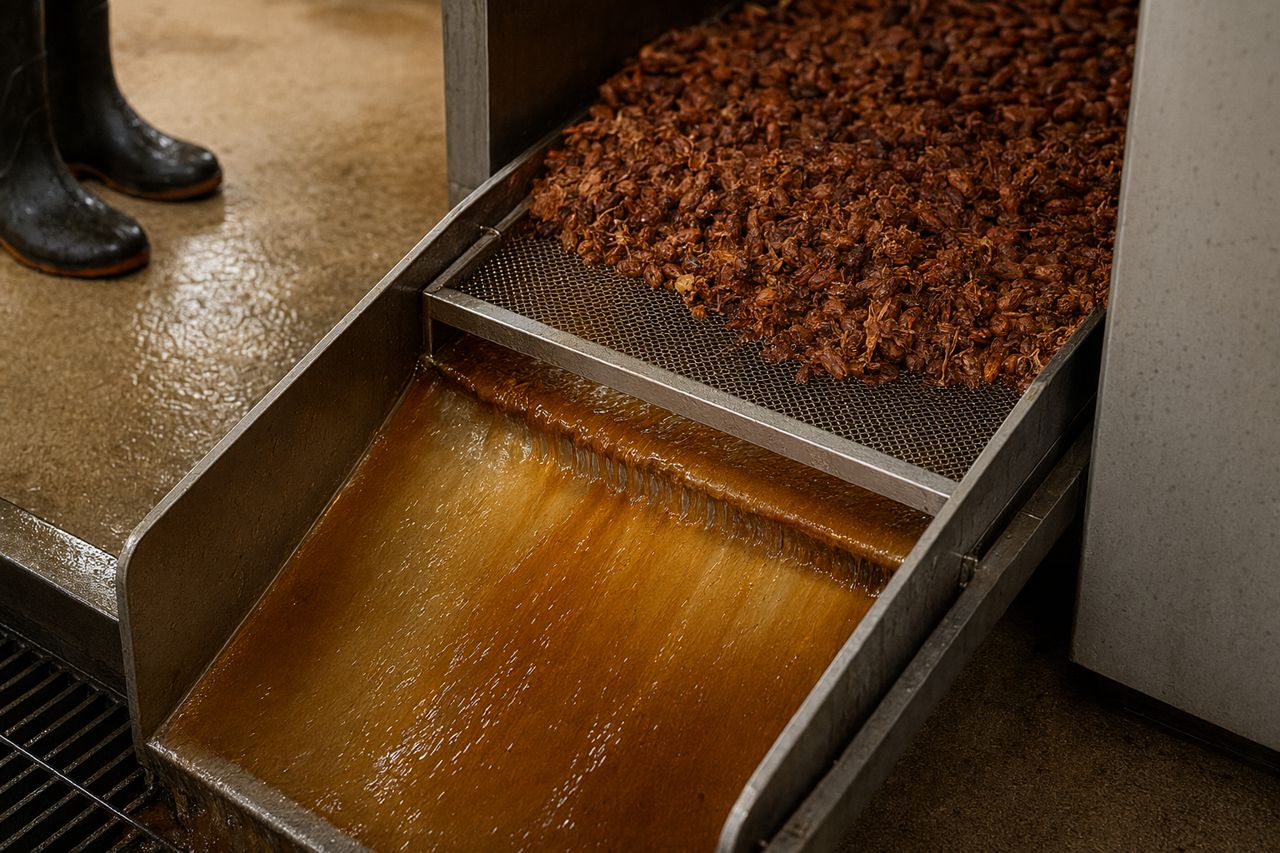
Cocoa fermentation drainage is not just liquid. Pulp strings, pod fragments, bean skins, and floor debris can quickly turn a channel into a retention trough. Screens and removable baskets should be positioned where operators can clean them without interrupting turns or moving through active leachate.
Practical rule: if a screen is difficult to reach during a busy fermentation day, it will be cleaned late. Late cleaning becomes backflow.
Leachate should not wander through the plant. It should be collected, observed, and transferred to the next handling step with minimal residence time in the fermentation area.
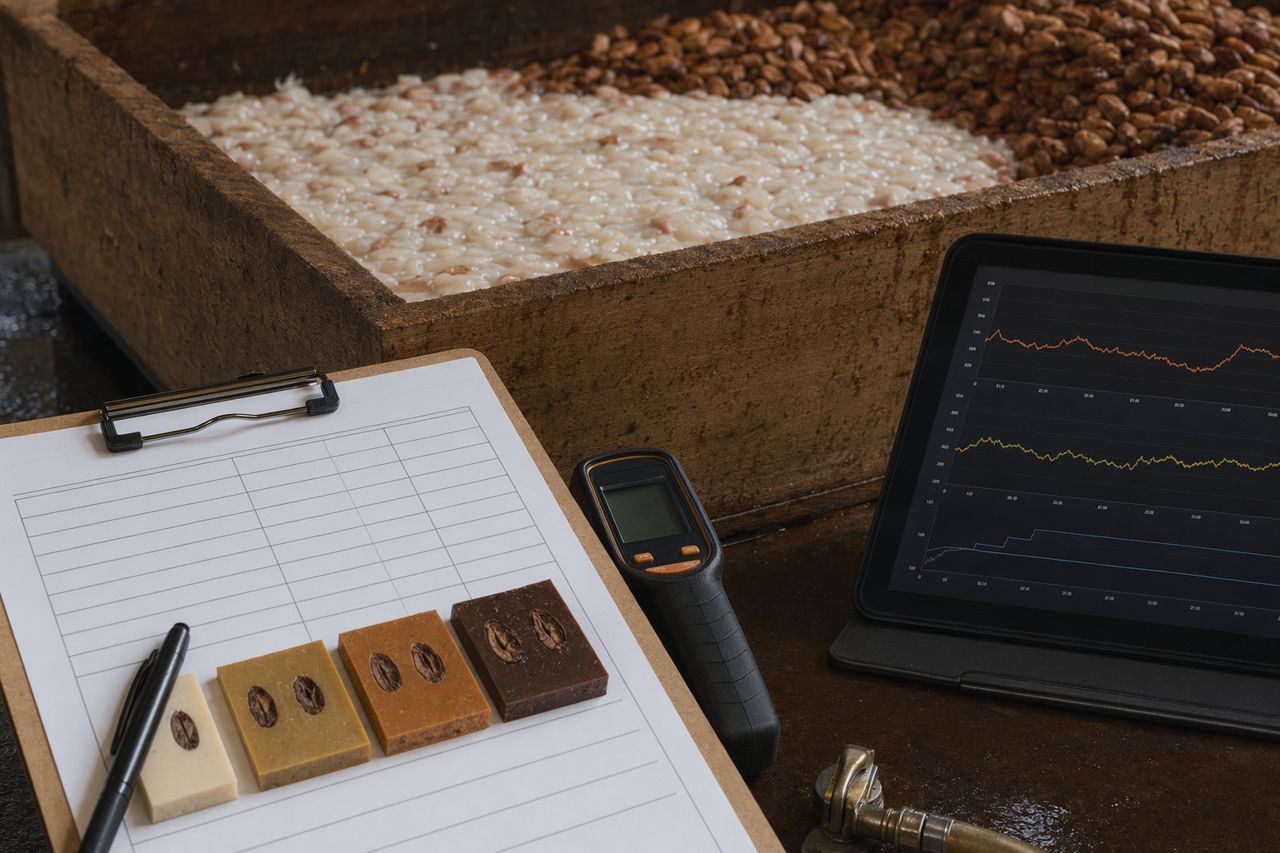
A disciplined team can learn a lot before any lab work begins:
These observations help identify batch changes, raw material variation, and sanitation drift.
High-viscosity mucilage drains slowly, holds solids, and increases floor contact time. When enzyme-assisted mucilage management is used appropriately, factories often evaluate it not as a laboratory idea, but as an operating lever: cleaner separation, more predictable liquid movement, easier washdown, and reduced sticky residue around fermentation infrastructure.
The right enzyme program should support the factory's fermentation objectives, not flatten them. The target is controlled pulp transformation while protecting the batch profile and downstream drying behavior.
A cocoa fermentation area is warm, wet, acidic, and biologically active by design. Sanitation must respect the process while preventing the floor, drains, and tools from becoming uncontrolled reservoirs.
Sanitation should match the operating day:
The strongest sanitation plans are simple enough to be executed when the plant is busy.
High-pressure water can move contamination from a dirty drain edge to a clean walkway if the sequence is wrong. Clean from higher-risk zones toward collection points. Keep tools assigned by area. Avoid pushing pulp solids into channels without removing them from screens and baskets.
A clean-looking floor is not enough. The drainage system must be cleanable by design.
Enzyme solutions for cocoa processing are usually discussed in relation to mucilage breakdown, fermentation consistency, and flavor precursor development. In production reality, they also affect handling.
When mucilage behavior becomes more predictable, the plant can better coordinate:
That is why Enzymesbase approaches enzyme selection with process context. A factory does not need an enzyme product in isolation. It needs a controlled operating fit: raw bean condition, pulp load, box geometry, fermentation duration, drainage infrastructure, and sanitation capability all considered together.
Use this checklist before changing equipment, sanitation chemistry, or enzyme strategy.
A well-run fermentation drainage area feels calm. Liquid has a path. Operators are not improvising with squeegees. Screens are accessible. Odor does not spike between shifts. Washdown finishes cleanly. Batch notes connect what happened in the boxes with what appeared in the drains.
That kind of control supports more consistent fermentation behavior, cleaner working conditions, and better use of labor. It also gives enzyme trials a fair operating environment. If the floor is uncontrolled, it becomes harder to evaluate any change inside the fermentation mass.
If your cocoa processing factory is reviewing fermentation drainage, leachate handling, or mucilage-management strategy, Enzymesbase can help align enzyme selection with plant-floor realities.
Tell us about your bean origin mix, fermentation format, drainage constraints, sanitation workflow, and target process outcomes. We will review the operating context and recommend a practical path for evaluation.
Tell us your application and volume — we reply with pricing and lead time.
We have received your message. We will reply by email.