A practical guide for cocoa factories on tracking wet bean fermentation signals, mucilage breakdown, cut-test progression, and flavor precursor development for repeatable batches.
Request pricingFor a cocoa processing factory, flavor does not begin at roasting. It begins while wet beans are still moving through pulp, heat, acid, oxygen, and time.
The challenge is not simply to “ferment well.” The challenge is to know which batch signals predict usable flavor precursor development, and which signals warn that the process is drifting before the beans reach drying or roasting.
Enzymesbase supports factories that want tighter fermentation control, better mucilage management, and more repeatable bean chemistry. As an enzyme supplier for cocoa processing, we focus on practical plant-floor outcomes: cleaner pulp breakdown, controlled mass movement, batch consistency, and more reliable precursor formation before beans enter the next process stage.
Cocoa factories often inherit variability from farm-side harvest conditions, pod maturity, pulp load, bean size, ambient temperature, microbial pressure, and box geometry. Even when the fermentation schedule looks familiar, the bean chemistry may not be moving at the same pace.
Tracking precursor development gives the fermentation team a more useful operating view than time alone.
A strong tracking program helps teams:
The goal is not more paperwork. The goal is fewer blind spots.
Before the first turn, the factory should know what kind of starting material has entered the system. Wet bean intake sets the operating window for every downstream decision.
Enzymesbase often advises factories to treat intake classification as the first control point, not an administrative step. Better segmentation produces better interpretation later.
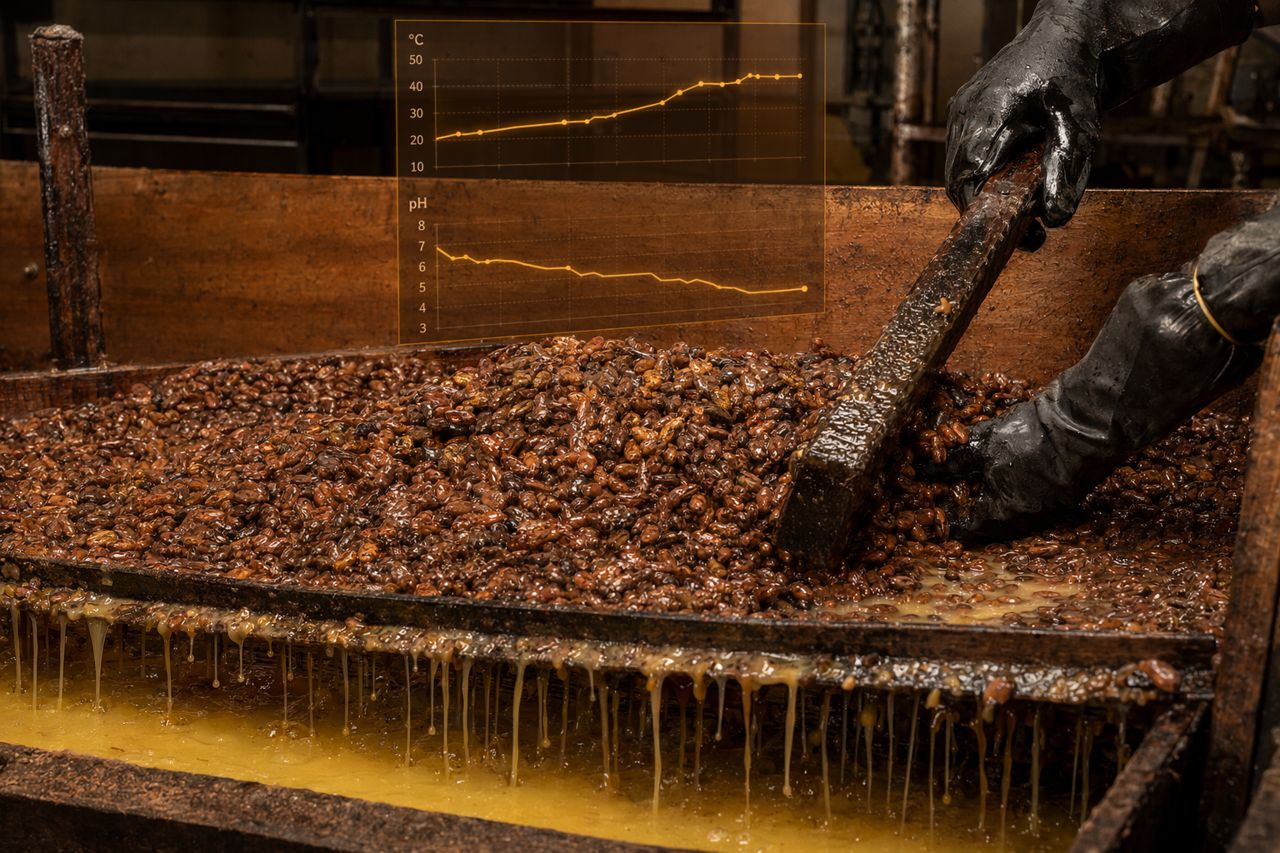
Mucilage is not just waste pulp. It controls drainage, heat transfer, oxygen exposure, microbial access, and how evenly the bean mass transforms.
When mucilage remains too thick for too long, the bean mass can become compacted. Drainage slows. Temperature rises unevenly. Some pockets over-ferment while other areas remain underdeveloped. The result is a wider spread in cut-test color and less predictable precursor formation.
Enzyme-supported mucilage management can help factories create a more consistent physical environment for fermentation. The commercial value is not theoretical: improved mass handling, more predictable turning response, cleaner liquid release, and fewer batches that require corrective handling.
A practical tracking system should combine physical, chemical, and visual indicators. No single metric explains the whole batch.
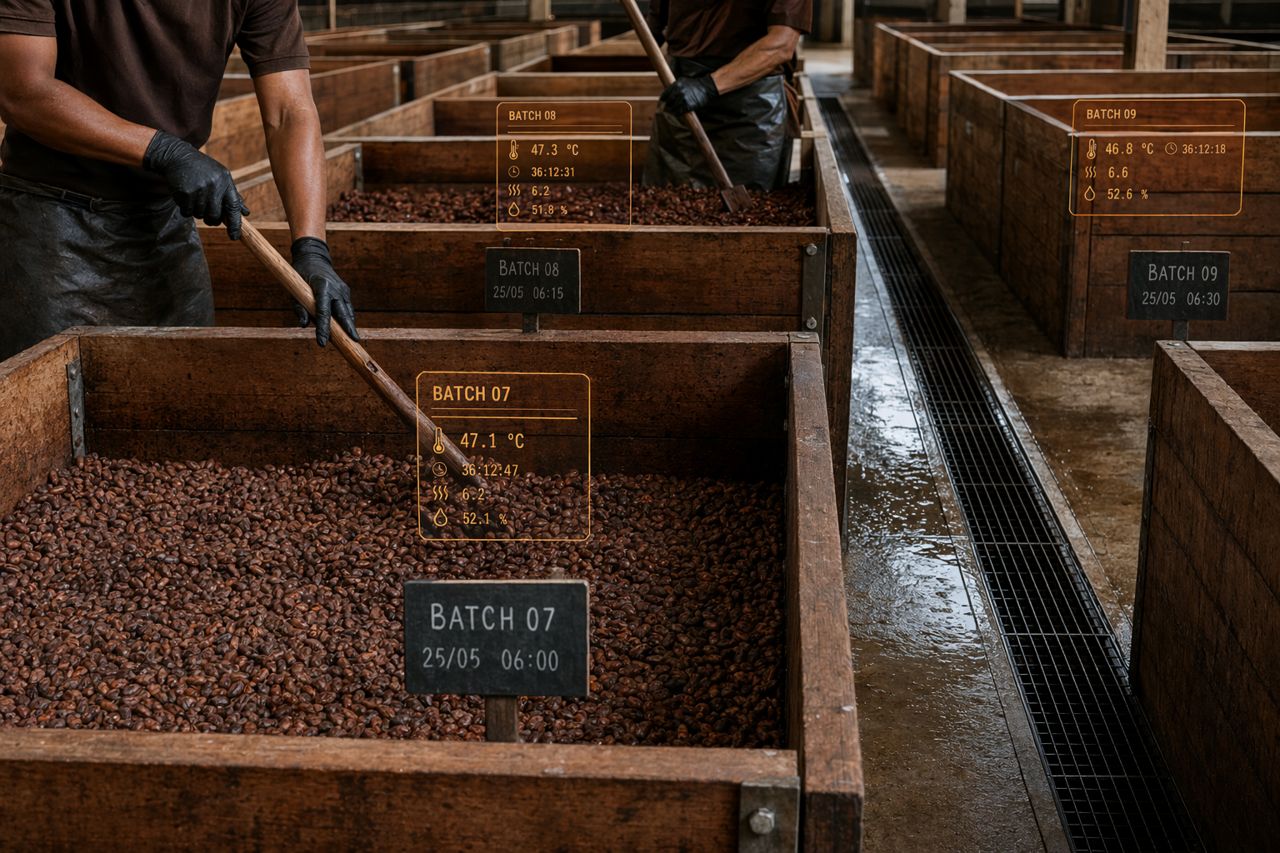
Temperature is the most visible fermentation signal, but it must be read as a curve, not a single number.
Track:
A uniform curve suggests the mass is transforming as a system. A split curve suggests compaction, uneven aeration, variable pulp loading, or inconsistent box handling.
pH helps indicate the movement of acids through pulp and bean tissue. The factory should track the pattern, not chase one reading.
Useful observations include:
For fermentation managers, the practical question is: are acidity and temperature working together, or is one signal moving while the bean interior remains behind?
Mucilage condition should be evaluated throughout the process.
Look for:
These observations are simple, but they are commercially important. Poor mucilage behavior slows handling and increases variability.
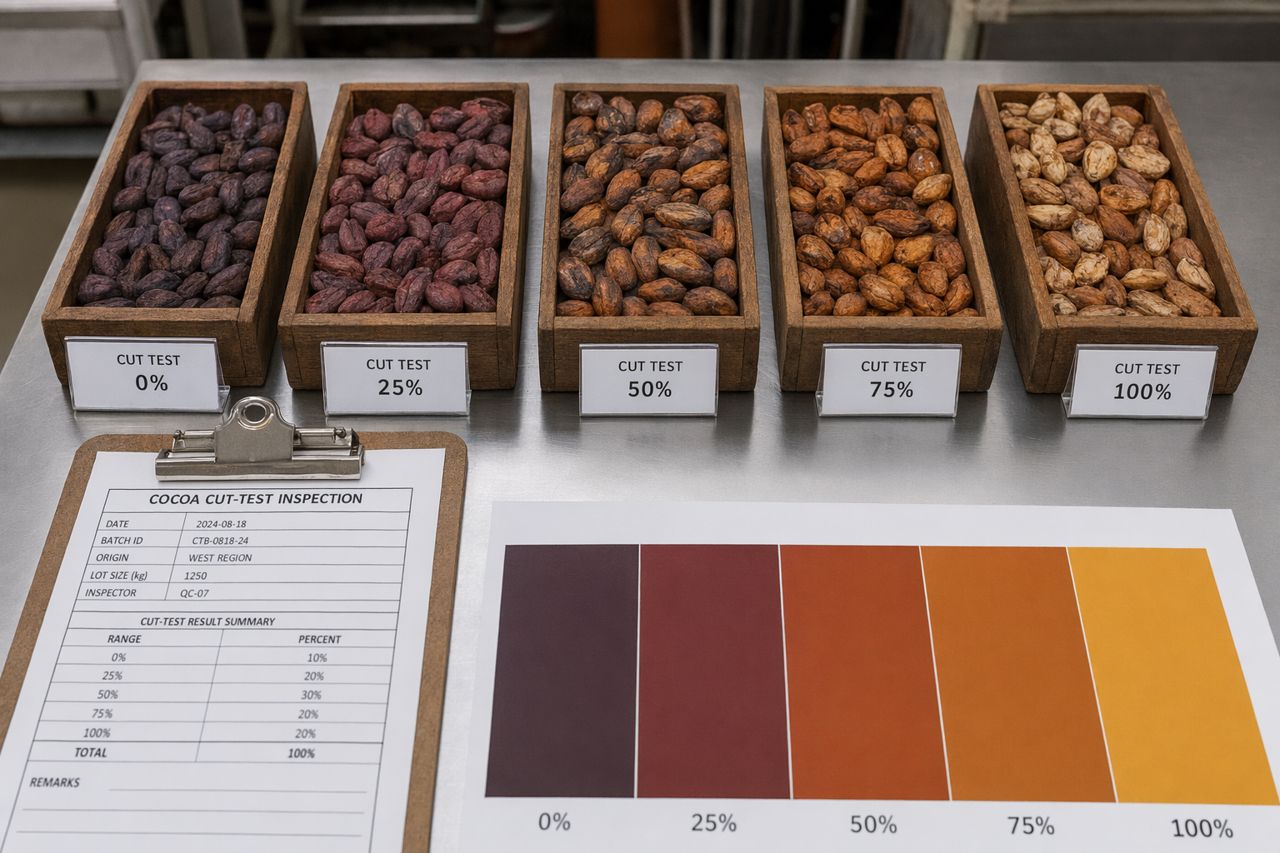
Cut-test data should not be treated as a final pass-or-fail check. It is a process trend.
Track:
A narrow distribution is usually more useful than a dramatic average. Factories need repeatable lots, not just a few good beans in the sample.
Sensory checks can be practical when they are structured. Use short, repeatable descriptors instead of broad tasting language.
Track process-relevant notes such as:
These descriptors should be linked to batch data, not kept as informal comments.
Flavor precursors are compounds and intermediate bean changes that support cocoa aroma development during roasting. For factory teams, the useful point is not academic detail. It is whether the fermentation process is creating beans that roast predictably.
A fermentation program should support:
Enzymesbase helps factories connect enzyme use to these operational targets. The emphasis is on controlled transformation, not uncontrolled acceleration.
Enzymes are not a replacement for fermentation discipline. They are a process tool when matched to the factory’s raw material, box design, handling schedule, and quality target.
Potential factory benefits include:
For a cocoa factory, the value of an enzyme program should be evaluated in process terms: less variability, better throughput, cleaner handling, and stronger alignment between wet bean intake and finished bean specification.
A good fermentation sheet should be short enough for the floor and structured enough for management review.
The best tracking systems make variation visible quickly. If a supervisor cannot see drift within the same shift, the system is too slow.
This often indicates delayed microbial and physical movement followed by aggressive heat generation. It may create uneven transformation inside the box.
Persistent stickiness suggests mucilage breakdown is lagging. This can affect turning efficiency, drainage, and oxygen distribution.
Surface observations can hide uneven cotyledon change. Cut-test distribution by location is important.
Acid generation alone is not flavor precursor success. The batch may need better balance between time, temperature, mucilage condition, and aeration.
This is a major repeatability warning. It usually points to raw material mixing, poor segmentation, uneven heat, or inconsistent turning response.
When introducing a new control practice or enzyme-supported mucilage strategy, compare batches against operational outcomes.
Track improvements such as:
A factory trial should be designed around the production reality of the site. Enzymesbase can help define comparison lots, observation points, and decision criteria before the first batch is treated.
Faceless video concept: Wet cocoa beans move from intake to controlled fermentation while amber process graphics show mucilage condition, temperature curve, pH trend, cut-test color, and batch release confidence.
On-screen subtitle theme: Track the wet bean. Control the mass. Protect the precursor pathway.
Enzymesbase is an enzyme supplier for cocoa processing teams that want practical factory support, not generic ingredient claims. We work with fermentation managers, plant supervisors, and technical buyers to match enzyme use with batch behavior, equipment limits, and finished bean targets.
If your factory is seeing sticky handling, wide cut-test variation, uneven fermentation heat, or inconsistent roast performance, we can help review the process and recommend a fit-for-purpose enzyme approach.
Tell us about your wet bean intake, fermentation format, throughput target, and current quality challenge. Use the on-site request a quote form and Enzymesbase will respond with a practical recommendation for your cocoa processing line.
Tell us your application and volume — we reply with pricing and lead time.
We have received your message. We will reply by email.